I'm no one special. That's the point.
Physiotherapist, Canadian-trained Clinical Pilates instructor, university lecturer, and a clinician just like you who got sick of watching brilliant people leave the best job in the world.
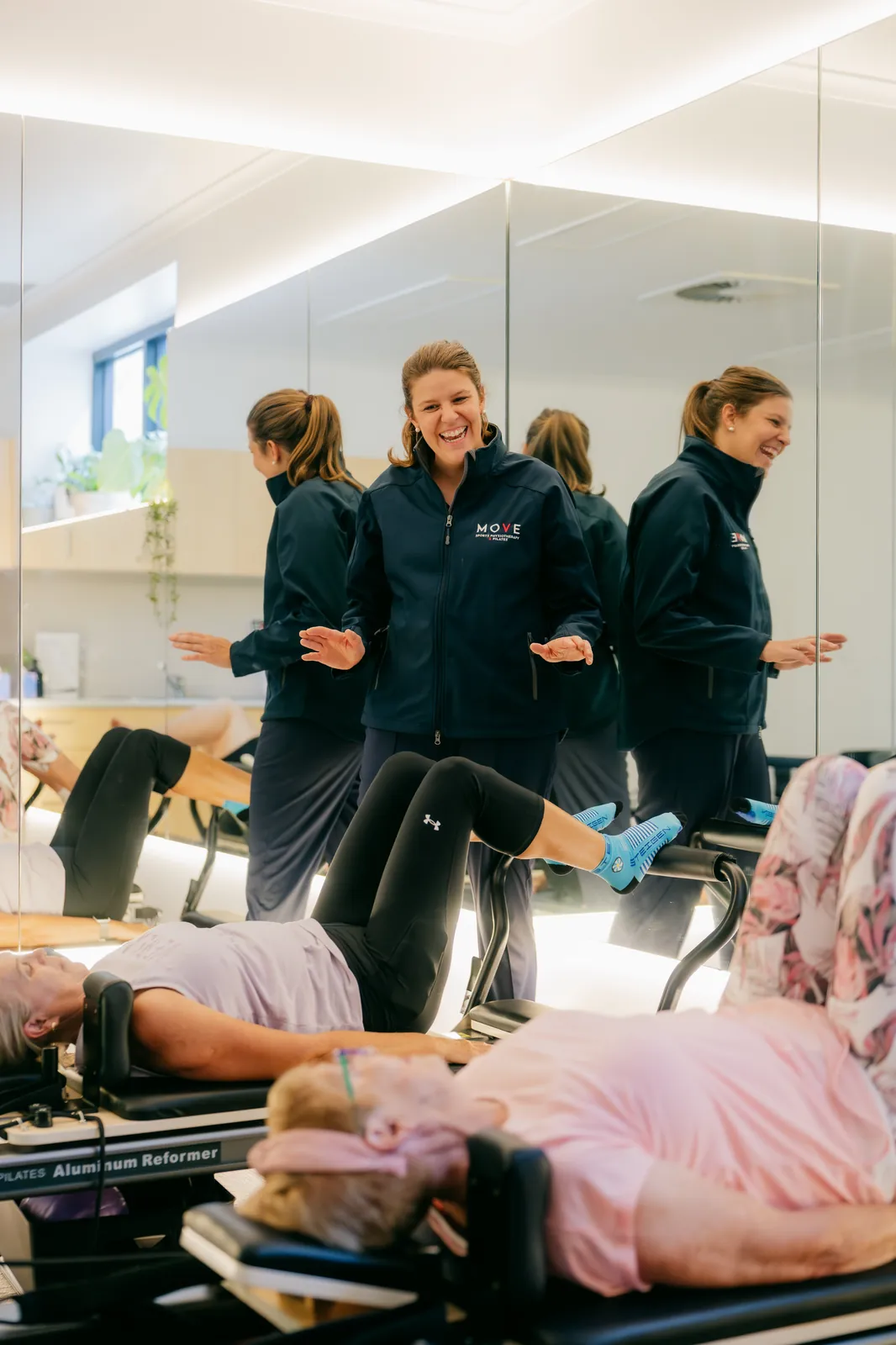
Two minutes with me, if you'd rather hear it than read it.
"Maybe I should just become a landscape gardener"
I was a new grad, working a weekend shift in private practice. A client came in with persistent back pain and a long, complicated history with health professionals. I couldn't find a single pain-free movement for her. I didn't help her move. I didn't even make her feel heard.
I remember the look she gave me. It said you have no idea what you're talking about. She was probably right.
I sat in my car afterwards and thought: what am I doing? Maybe I should just become a landscape gardener. Four years at uni and I still don't actually know how to help people move. I felt useless. I felt like I'd made her worse, and that is not why I got into physio.
More courses. More tricks. Same hole.
So I went hunting. APA Spinal Level 1. APA Sports Level 1. A Level 1 strength and conditioning course so I could cue movement properly. Hours down YouTube rabbit holes looking up Clinical Pilates movements.
Every one of them handed me more tricks and tips. Not one of them gave me a framework for the person in front of me who was in pain and afraid to move. I still had no clear process for progressing or regressing an exercise. I was doing everything the industry tells a new grad to do, and in the treatment room I still felt like a fraud.
The problem was never how much education I had. It was the kind.
I stopped collecting exercises and started learning how to think
Canadian-trained Clinical Pilates gave me the missing piece: not a bigger repertoire, but a way to reason. How to assess any body, choose the right movement for the right reason, and know exactly what to do when pain and fear walked into the room.
That's the whole difference. Anyone can hand you exercises. Almost nobody teaches you the decisions.
So I built the course I needed in that car park.
The long way round, and what it taught me
Not a wall of letters for the sake of it. Every one of these taught me something real, and I'm grateful for all of them. None of them handed me a framework for the person in front of me who was in pain and afraid to move. That part I had to build myself, in the room, over years.
- Bachelor of Physiotherapy Charles Sturt University · Dean's Awards for Academic Excellence
- Graduate Certificate in Sports Physiotherapy La Trobe University
- Clinical Pilates instructor training and mentorship, Vancouver A six-month course, certified to teach beginner through advanced across all classical Pilates equipment. Where I learned the apparatus properly, and started thinking in decisions rather than exercises
- Credentialled McKenzie Clinician (Cred. MDT) The McKenzie Institute · Mechanical Diagnosis and Therapy
- Sports Physiotherapy Level 1 and Level 2 Australian Physiotherapy Association
- Women's Health Level 1 Australian Physiotherapy Association
- Postgraduate pain sciences University of South Australia, the home of Professor Lorimer Moseley's pain science group
- Trained Pain Revolution Local Pain Educator Delivering evidence-based pain education in partnership with Pain Revolution
- Introduction to Health Data Analytics for Clinicians University of Melbourne · eight-week course
- University lecturer and clinical educator Deakin University and Australian Catholic University, teaching functional anatomy, foundations of practice and clinical reasoning
And the part that isn't on any certificate. Years of being mentored by senior clinicians who were generous with their thinking. Sitting in on their sessions. Asking the dumb questions. Having someone pull me aside after a bad one and show me what I'd missed.
That's the bit that actually changed how I practise, and it's the bit almost nobody gets access to. It's exactly what the cohort is built to give you.
Every kind of case, every day
I came up through public health, where complexity was the day job and you don't get to pick your caseload. Years rotating through acute neurology, surgical, oncology and rehabilitation wards. Senior community health physiotherapy, supervising other clinicians. Advanced practice in the emergency department, seeing acute presentations as the primary clinician. Running a specialist falls and balance clinic in a rural setting, where the nearest specialist was hours away and you were it.
I also spent time in Canada working with elite athletes.
None of that is a flex. It's the reason I know these frameworks hold up, because I've had to use them everywhere, on the bodies that don't read the textbook. And it's why I know they work in a public clinic, because that's where I learned most of it.
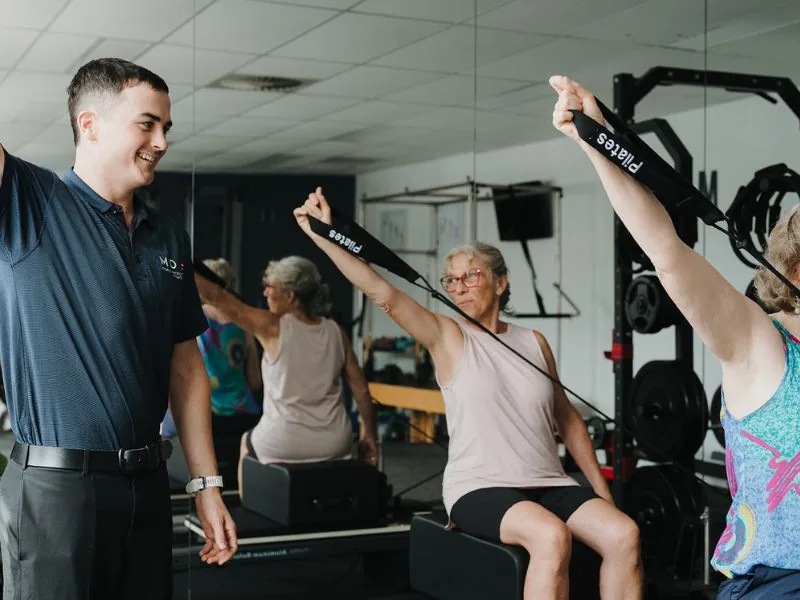
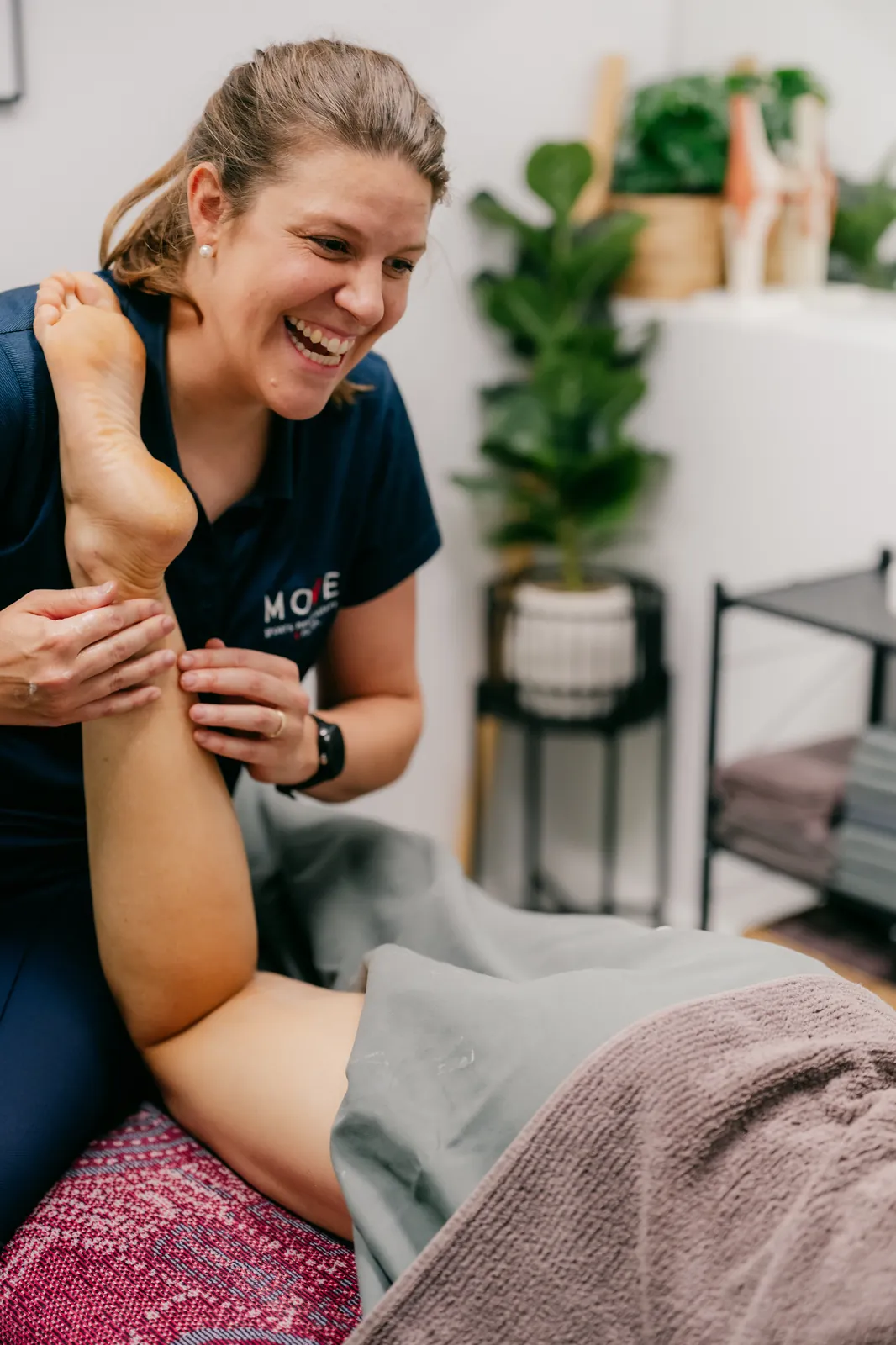
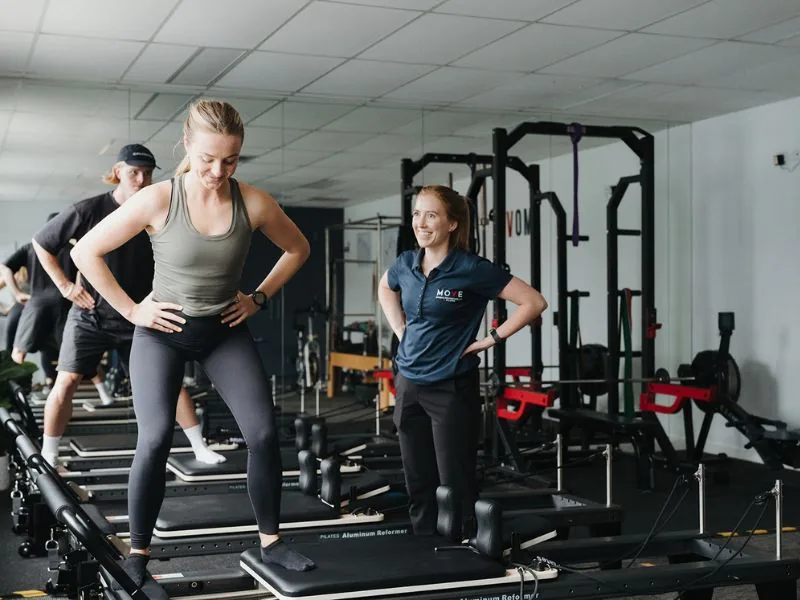
For the last nine years I've run one studio where we do this daily: fear-avoidant clients who ended up in fitness Pilates gaining muscle, people too scared to move who now lift, postpartum clients rebuilt back to sport, POTS, hypermobility and rheumatological cases.
Along the way I trained my own team, new grads included, on the same frameworks. Watching them become the kind of clinicians people drive across town to see is what convinced me these are skills, not talents.
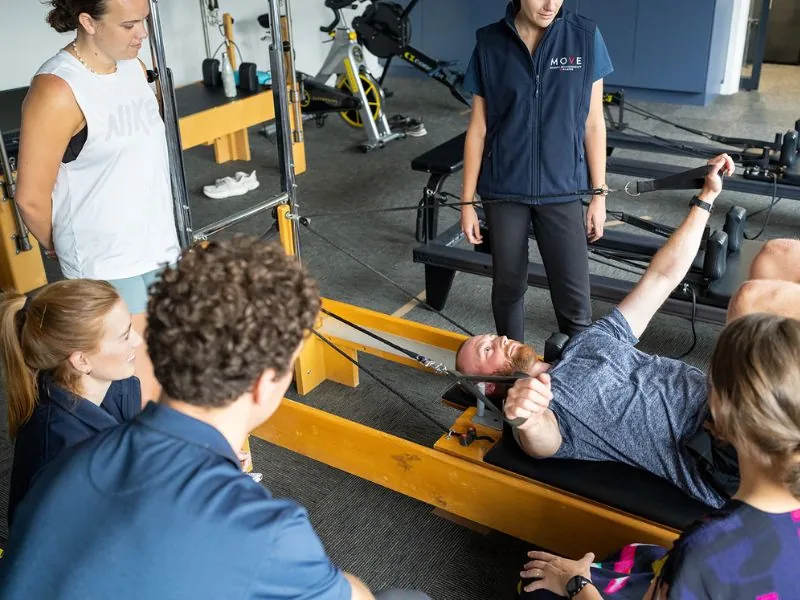
I'm just a clinician who got sick of the same problem
I want you to know I'm just a human, just a clinician like you. I got sick of seeing the same problem again and again and I wanted to do something about it. I'm no one special, and that means you can apply this same stuff too.
I have a busy brain and it's messy. That's exactly why the frameworks I built are helpful. They keep me accountable to my clients and to my team.
It's messy, it's chaotic, it's not polished. But we're learning together.