Hey Hey,
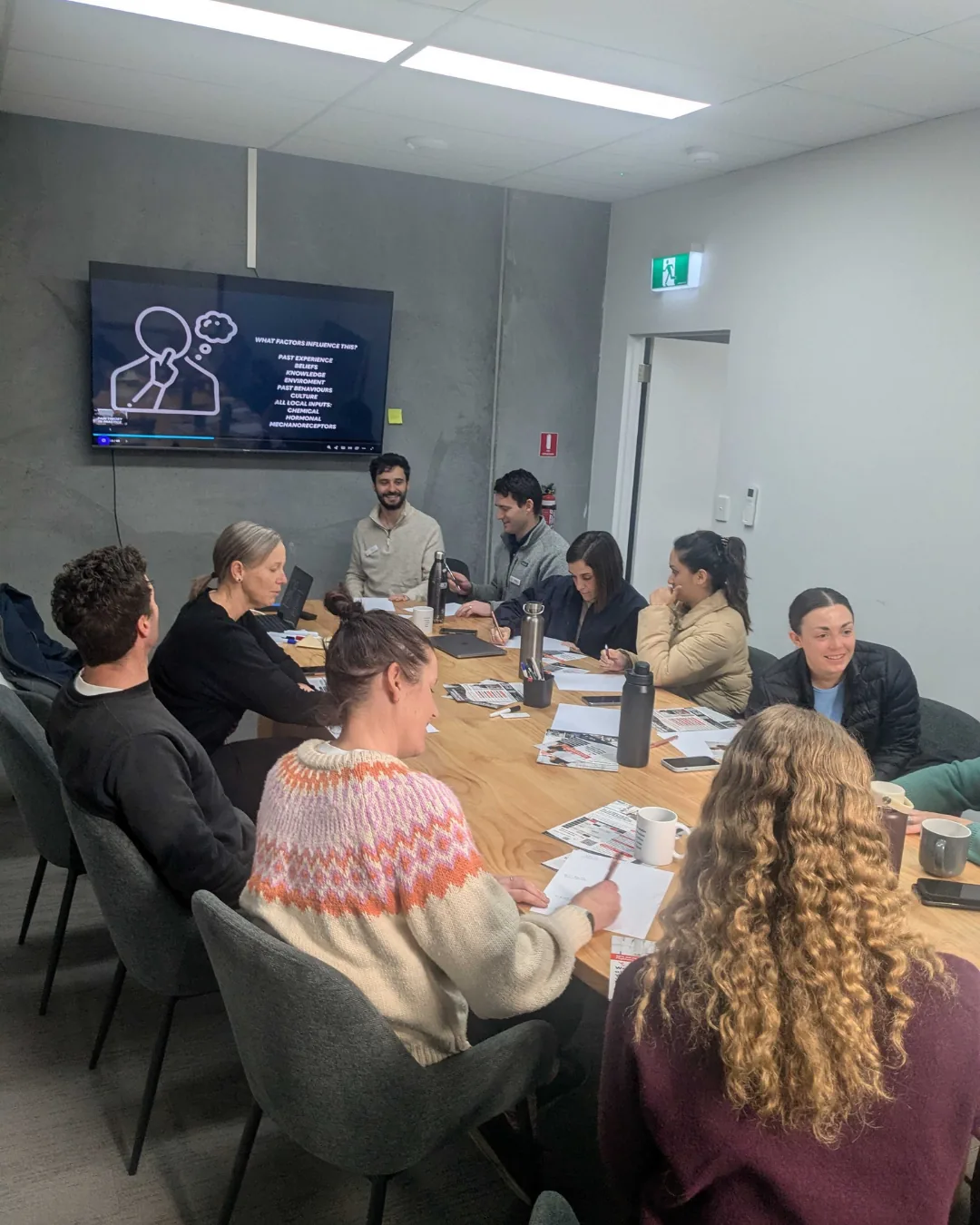
I gave a pain explanation on Thursday that landed flat on its face.
I could see it happening in real time. It was like a train wreck.
She got more worried as I talked. Not less.
And I kept going anyway. It was bad.
Think
Afterwards I made myself write down why it didn't work.
Here's what I got.
She wasn't ready. I jumped the gun. I knew it was what she needed, but I went before we had rapport and trust.
And I never asked what she already believed, or what she was actually worried about.
Pain education, and education in general, is a skill. It only improves if we reflect and practise.
So can you name three actual reasons why yours landed or didn't?
Learn
This one: Manual Therapy + Education.
Sixty adults with chronic non-specific low back pain, randomised into three groups of 20. Manual therapy alone, 10 x 30 minute sessions over four weeks. Manual therapy plus four weekly 30 minute pain neuroscience education sessions with motivational interviewing woven through. Or a control group given written home stretches.
Measured at baseline, week four and six months.
The combined group beat manual therapy alone on every outcome at both time points. Pain dropped 61% versus 45%. Disability 56% versus 30%. Fear of movement 27% versus 16%. Expecting the worst 36% versus 19%.
More interesting than the size of the gap is its shape over time.
At six months only the combined group still held a meaningful difference from baseline on pain and disability. The manual therapy group's gains on fear and catastrophising had evened out completely.
It's only one trial. But here's what I take from it. Manual therapy reduced fear in the short term simply because it reduced pain, not because anything changed in how people thought. Once the pain relief faded, so did the psychological gains.
The education group had actually changed their beliefs. So it stuck.
Play
Use touch and pain education at the same time. Have a go this week and see how it lands.
Remember it's a skill you have to practise, and it will often be terrible at the start.
Let me know how you go!
Cheers
Jess
PS — oi, don't forget The Clinical Collective is free to join. Clinicians just like you, swapping their worst ever explanations. Mine's still winning.